
CDP(カスタマーデータプラットフォーム)とは、複数のソースから顧客データを収集し、名寄せによって永続的な統合プロファイルを構築し、パーソナライズや分析、AI主導のチャネル横断アクティベーションにリアルタイムで活用するソフトウェアである。
CDPとは Customer Data Platform(カスタマーデータプラットフォーム)の略称で、日本語では「顧客データ基盤」と呼ばれることも多い。この用語は2013年にDavid Raabが提唱し、彼が設立したCDP Instituteは、このカテゴリーを「他システムからアクセス可能な永続的かつ統合された顧客データベースを構築するパッケージソフトウェア」と定義する。ガートナーは「マーケティングおよびその他のチャネルから得られる顧客データを統合するマーケティングテクノロジー」と説明している。
しかし2026年現在、どちらの定義も拡張を必要とする。CDPはデータを統合するだけでなく、AI主導のアクティベーションのためのリアルタイム基盤としての役割も担わなければならない。統合プロファイルの最も重要な利用者は、もはや人間のアナリストではなくAIエージェントになりつつあるからだ。
要点まとめ
- CDP(カスタマーデータプラットフォーム)は、あらゆるソースから顧客データを統合する。 Webサイト、アプリ、CRM、POS、サポートなどの情報を、名寄せによって顧客ごとの単一の永続的プロファイルへとまとめ上げる
- CDPはCRM・DMP・データウェアハウスと守備範囲が異なる。 CRMは既知の連絡先情報を追跡し、DMPはサードパーティ Cookie を用いて匿名オーディエンスをターゲティングしていた(現在はほぼ消滅)。データウェアハウスはデータを保存・照会できるがアクティベーション機能を持たない。CDPはファーストパーティデータを永続的かつデバイス横断の名寄せとネイティブなアクティベーションによって統合する
- CDPソフトウェアの主な機能には、データ取り込み、名寄せ、プロファイル統合、オーディエンスセグメンテーション、リアルタイムアクティベーション、分析、データガバナンス、AI・予測モデリングなどが含まれる
- CDPというカテゴリーは3つの段階を経て進化してきた。 パッケージ型(バッチ処理・ルールベース)、コンポーザブル(ウェアハウス上で完結する、モジュール構成)、そしてエージェンティック(CDP・メッセージング・AIを一体化し、フィードバックループを数秒で完結させる)の3段階である
- 2026年、AIこそが最大の差別化要因である。 問われるべきは、そのCDPがCustomer Intelligence Loop(顧客データの収集・統合・活用を継続的に回す仕組み)を止めずに回し続けられるか、つまりAIエージェントが自律的に意思決定・実行・学習を行えるかどうかだ
- エンタープライズ向けCDPの費用は年間20万~50万ドル以上(北米市場の水準)が目安だが、総保有コスト(TCO)には連携の保守、エンジニアの人件費、コンプライアンス対応の費用も含めて見積もる必要がある。特にコンポーザブル構成ではこれらの費用がかさみやすい
CDP(カスタマーデータプラットフォーム)とは何か
実務上、CDPはチームに単一かつ信頼できる顧客プロファイルを提供し、オーディエンスの構築、体験のパーソナライズ、キャンペーンの連携、あらゆるチャネルをまたいだカスタマージャーニーの計測を可能にする。
CDPが解決する課題は構造的なものだ。顧客データは何十ものシステムに分散しており、それをリアルタイムに収集・統合・活用できる単一のツールは存在しない。
この点で、CDPはデータベースやデータウェアハウスと異なる。単にデータを保存するのではなく、実用的な顧客プロファイルを作り出すことに特化して設計されており、チャネルをまたいで名寄せを行い、オーディエンスセグメントを構築し、それらを必要なツールへ連携させる。
CDPを他の顧客データツールと一線を画すものにしているのは、次の4つの機能を1つのプラットフォームに統合している点だ。
- データ収集:オンラインとオフラインを問わず、あらゆる顧客接点からデータを取得する
- 名寄せ:分断されたレコードを統合プロファイルへとつなぎ合わせる
- セグメンテーションとインテリジェンス:プロファイルを実用的なオーディエンスへと変換する
- アクティベーション:それらのオーディエンスをリアルタイムで下流のチャネルへ届ける
CRMもDMPもデータウェアハウスも、この4つすべてを兼ね備えたプラットフォームは他に存在しない。これが、CDPというカテゴリーが2016年に生まれ、周辺ツールが進化を続ける中でも生き残っている理由だ。データ統合とアクティベーションを同時に解決するという課題は、他のどの選択肢によっても解消されていないからである。
CDPで何ができるのか
CDPは、データ収集・プロファイル統合・インテリジェントな分析・チャネル横断のアクティベーションを絶えず繰り返すサイクルを回す。cdp.comはこれをCustomer Intelligence Loopと呼んでいる。 このループは、ベンダーやアーキテクチャを問わず、あらゆるCDPの中核機能を定義する。顧客データ基盤としてできることは、突き詰めればこのループを止めずに回し続けることに集約される。
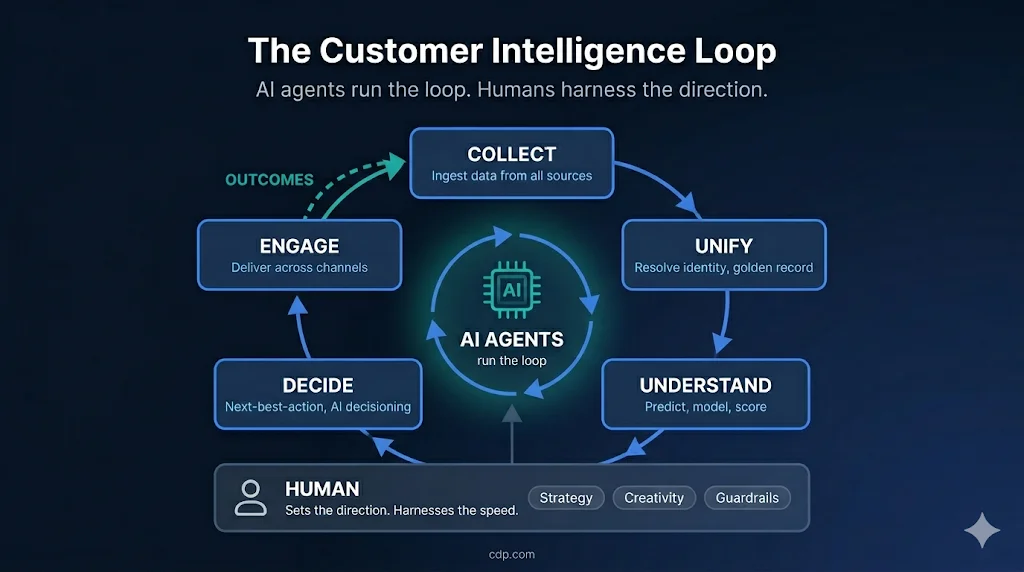
収集 → 統合 → 理解 → 意思決定 → エンゲージメント → (収集に戻る)
あるシグナルが発生する(顧客が商品ページを訪問する)。CDPは名寄せを行い、統合プロファイルを更新する。AIは行動履歴、購買データ、チャネルの好みといった全体の文脈を評価し、最適なアクションを決定する。プラットフォームはそれを実行する(SMSを送る、パーソナライズされたオファーを表示するなど)。結果(開封したか、クリックしたか、コンバージョンしたか)はプロファイルへとフィードバックされ、次の意思決定の精度を高める。
このループが単一のプラットフォーム内で数秒のうちに回るとき、CDPは学習するシステムになる。1回1回のやり取りが、次のやり取りをより賢くする。一方、各段階が複数のベンダーに分断されていると、ループの速度は大きく低下する。AIはアクションを実行しても、結果データが外部システムに閉じ込められて戻ってくるまでに数時間かかるため、古いデータから学習することになる。
このループを閉じるのは、AIと人間の連携である。AIエージェントはスピードの面でループを閉じる。 5つの段階を自律的かつ継続的に回し続ける。人間は戦略のレベルでループを閉じる。 目標を設定し、クリエイティブとブランドのガードレールを定義し、システムが逸脱したときに介入する。どちらか一方だけでは、ループを閉じることはできない。
4つの中核機能の仕組み
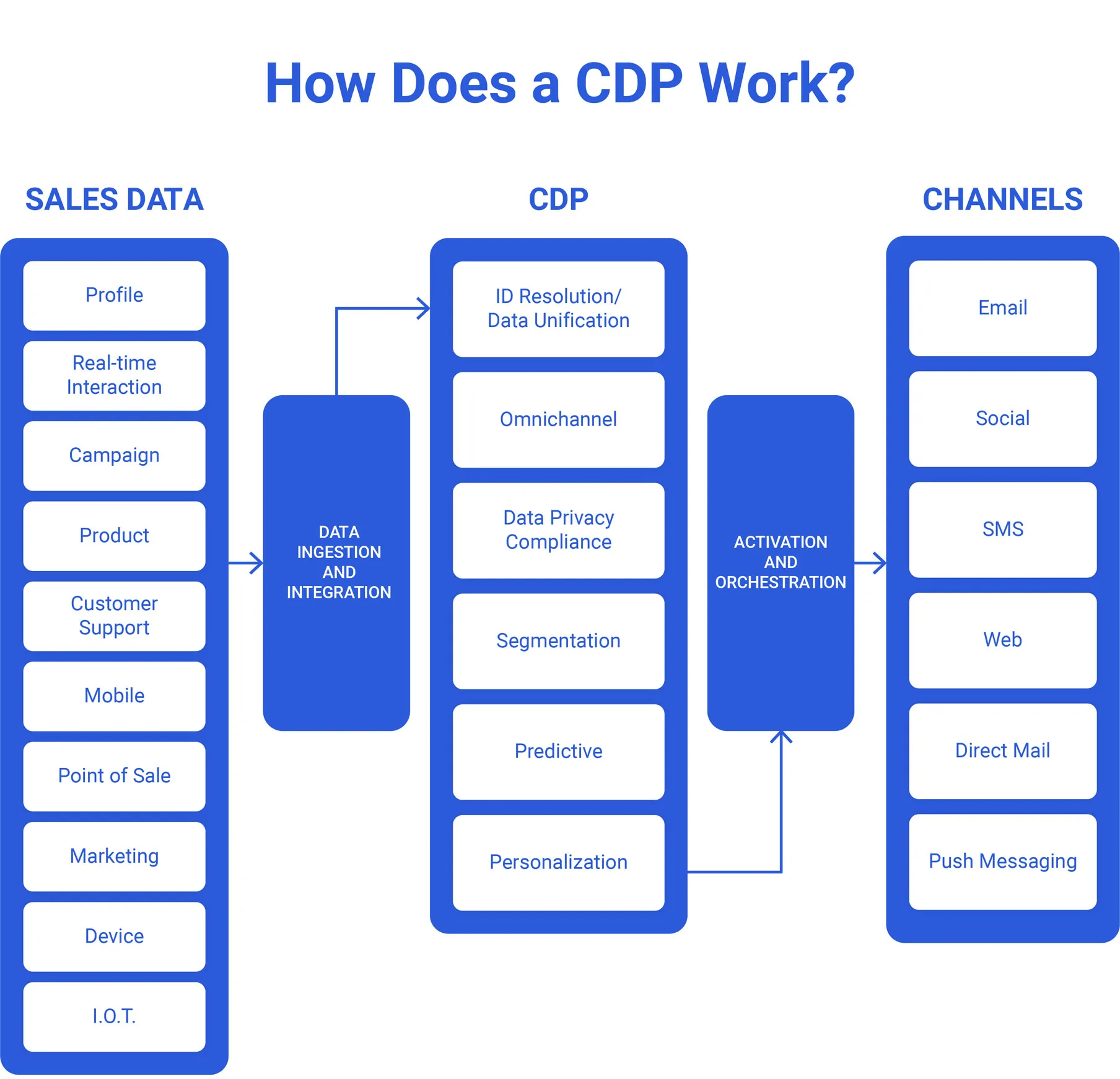
出典:Treasure Data
1. 収集:あらゆるソースからデータを取り込む。 CDPは顧客データを生み出すあらゆるシステム(Webサイト、モバイルアプリ、CRM、メールプラットフォーム、POS、ロイヤルティプログラム、サポートチケット、広告プラットフォーム、IoTデバイスなど)と連携する。標準コネクタ、SDK、Webhook、APIを通じて、構造化データ・半構造化データ・非構造化データを取り込む。ここで求められるのは網羅性である。リテンションを判断するAIエージェントには、顧客の全体像が必要になるからだ。
2. 統合:名寄せによって永続的なプロファイルを構築する。 生データはメールアドレス、デバイスID、会員番号、Cookie ID、CRMレコードなど、異なる識別子を伴って届く。名寄せ(アイデンティティ・レゾリューション)は、確定的マッチング(完全一致する識別子)と確率的マッチング(行動パターンやファジーロジック)を組み合わせて、これらを単一の永続的な顧客プロファイルへとつなぎ合わせる。その結果生まれるのがシングルカスタマービューである。リアルタイムで更新され続ける、生きた顧客記録だ。
3. 意思決定:顧客データにインテリジェンスを適用する。 基本的なCDPでは、マーケターが手作業でルールベースのセグメントを作成する。より高度なCDPは、統合プロファイルに機械学習を適用し、顧客ごとに最適なアクションを判断する。具体的には、解約や顧客生涯価値を予測する予測分析、AIが自動で発見する顧客セグメント、顧客の全体的な文脈をリアルタイムで評価するネクストベストアクションなどが挙げられる。
4. アクティベーション:チャネルをまたいで実行する。 統合プロファイルとインテリジェントな意思決定があっても、それを実行に移せなければ意味がない。データアクティベーションとは、メール、SMS、プッシュ通知、アプリ内メッセージ、広告、ダイレクトメールといったチャネルを通じて、適切な顧客に適切なタイミングで適切なメッセージを届けることを意味する。ネイティブなメッセージング機能を持つCDPは、同一プラットフォーム内で意思決定と実行を完結させ、数秒でフィードバックループを閉じることができる。
さらに詳しく:ファーストパーティデータとは何か、なぜ重要なのか
カスタマーデータプラットフォーム(CDP)ソフトウェアの主な機能
CDPソフトウェアには、汎用的なデータツールとは一線を画す、中核となる機能セットが備わっている。 CDPソリューションを評価する際は、次の機能を確認したい。
データ取り込みとコネクタ。 CDPは自社のスタック内にあるあらゆる顧客データソース(CRM、メール、Web解析、モバイルアプリ、POS、サポート、広告など)と連携できなければならない。バッチ取り込みだけでなく、標準コネクタとストリーミング取り込み(リアルタイム取り込み)に対応しているか、APIやWebhookによるカスタムデータソースへの対応があるかを確認する。
名寄せ。 確定的マッチングと確率的マッチングを用いて、異なるシステムに存在する顧客レコードをつなぎ合わせる機能。これはCDPの根幹をなす機能であり、精度の高い名寄せがなければ、それ以降のあらゆる機能の質が低下する。機械学習を用いたマッチングは主要なプラットフォームでは標準となっているが、匿名データと既知データを紐づける精度には依然としてばらつきがある。詳しくは名寄せの仕組みを参照。
プロファイル統合。 レコードのマッチングにとどまらず、CDPはデータを統合・重複排除し、顧客がチャネルをまたいでやり取りするたびに情報が豊かになる、クリーンで永続的なプロファイルへと仕上げなければならない。これには、データの検証、正規化、ソース間で情報が矛盾した際の解決処理も含まれる。
オーディエンスセグメンテーション。 行動、属性、イベント、予測スコアに基づいて、SQLやIT部門の支援を必要とせずにセグメントを構築できるセルフサービスのツール。より高度なCDPは、価値の高いコホートを自動的に発見するAIによるセグメンテーションを備えている。
リアルタイムアクティベーション。 バッチではなくリアルタイムで、オーディエンスセグメントや個々のプロファイルデータを、メール、SMS、広告プラットフォーム、パーソナライゼーションエンジン、分析ツールなどの下流のツールへと送り出す機能。リアルタイムCDPは、セッション中のパーソナライズを可能にするAPI並みの速度でプロファイルを提供する。
分析とレポーティング。 セグメントのパフォーマンス、カスタマージャーニーの分析、マーケティングアトリビューション、キャンペーンの効果測定のための組み込みダッシュボード。CDPは、あらゆるチャネルにまたがる顧客指標について、信頼できる唯一の情報源となるべきだ。
プライバシー、同意管理、データガバナンス。 一元化された同意の記録、削除請求への対応、開示等の請求への対応、ロールベースアクセス制御(RBAC)。日本の個人情報保護法(Cookie IDや閲覧履歴などの個人関連情報を第三者提供する際の同意確認義務を含む)や、GDPR・CCPAといった各国のプライバシー関連法への対応を支える機能である。
AIと予測モデリング。 解約予測、顧客生涯価値の予測、ネクストベストアクションのレコメンデーション、エージェンティックマーケティングの機能。最も先進的なCDPは、クローズドループの意思決定を実現するために、AIをプラットフォームに直接組み込んでいる。
CDP導入のメリット
CDPは、データのサイロを解消し、パーソナライズをスケールさせ、AI主導のマーケティングのための統合データ基盤を提供することで、測定可能なビジネス価値をもたらす。 CDPの導入によって組織が得られる主なメリットは次の通りだ。
統合された顧客ビュー。 CDPはあらゆる接点のデータを統合し、シングルカスタマービューを実現する。あるリテールブランドは、メール、ロイヤルティ、POSの各システムに存在する「ユニーク」な顧客のうち23%が重複であることを発見した。データ統合によって真の顧客基盤が明らかになり、顧客生涯価値の算出も是正された。
パーソナライズの精度向上。 完全な顧客プロファイルがあれば、メールに限らずあらゆるチャネルでパーソナライズを行える。マッキンゼー(McKinsey, 2021)によれば、パーソナライズに優れた企業は、平均的な企業と比べてその取り組みから40%多くの収益を生み出しているという。
セグメンテーションの向上。 セルフサービスのセグメンテーションによって、セグメント作成にかかる時間が数日から数分に短縮され、キャンペーンのたびにデータチームへ依存する必要がなくなる。チャネル横断のセグメントは、オンライン行動、購買履歴、オフラインでのやり取りを組み合わせて構築できる。
キャンペーン成果の向上。 抑制配信や配信頻度の管理によって、過剰なメッセージ配信を防げる。フォレスター(Forrester, 2023)によれば、統合された顧客プロファイルを導入した組織は、重複したメッセージ配信の排除とチャネル横断での連携によって、マーケティング効率が15~25%向上しているという。
広告費の無駄の削減。 既存顧客を新規獲得キャンペーンの対象から除外し、価値の高い類似オーディエンスを構築できる。ボストン コンサルティング グループ(BCG, 2022)の調査では、主要なマーケティング機能でファーストパーティデータを活用しているブランドは、サードパーティデータに依存するブランドと比べて、最大2.9倍の収益向上と1.5倍のコスト削減を達成しているという。
顧客維持率の向上。 AIによる解約予測は、離反リスクの高い顧客を特定し、能動的な介入を促す。統合プロファイル上で解約の兆候を捉えられれば、離反が起きてからの巻き返しではなく、その前段階での働きかけに切り替えられる。
プライバシーとガバナンス。 一元化された同意管理とデータガバナンスによって、プライバシーポリシーの徹底、同意の管理、削除請求への対応を単一のシステムから行えるようになり、マーケティングスタック全体のコンプライアンスリスクを低減できる。
チーム横断でのアクティベーションの高速化。 マーケティング、営業、サポート、分析の各チームが同じ顧客プロファイルを参照することで、データの突き合わせ作業がなくなり、アクションまでのスピードが速くなる。
SubaruがCDP活用でCTRを350%向上させた事例資料をダウンロードする。ディーラー、デジタル、CRMのデータを統合し、最適なタイミングでパーソナライズされたメッセージを配信することで、2,600万ドルの帰属収益を生み出した事例だ。
導入前後の比較:CDPによって何が変わるか
| CDPなし | CDPあり | CDP + AI | |
|---|---|---|---|
| セグメンテーション | データチームにメールで依頼し、CSVを3日待つ | ビジュアルUIでセルフサービス、20分で完了 | AIが自動でセグメントを発見 |
| チャネル横断データ | サイロ化(サポートチケット対応中の顧客をキャンペーン対象から除外できない) | 統合(Shopify、Zendesk、分析データが1つのプロファイルに) | 統合 + リアルタイムの行動シグナル |
| アトリビューション | ラストクリックの推測(メール起点の売上を検索広告の成果としてGAが計上) | デバイス横断の名寄せにより各チャネルへ適正な成果を配分 | AIがチャネル横断で予算配分を最適化 |
| キャンペーン実行 | 手作業で構築 → 配信 → レポートを待つ | 構築 → 配信 → リアルタイムでプロファイル更新 | AIエージェントが自律的に判断・配信・学習 |
| マーケターの役割 | データの整形とキャンペーンオペレーション | キャンペーン戦略とクリエイティブ | 戦略、クリエイティブディレクション、AIの監督 |
CDPの活用事例
CDPの活用事例は、データ統合・パーソナライズされたアクティベーション・AI主導の成果という3つの階層に分けられ、多くの組織はまず基盤の階層から着手し、段階的に上位へと進んでいく。 各階層は、その下にある階層の機能の上に成り立っている。
基盤:データ統合
- シングルカスタマービュー: あらゆるシステムのレコードを、顧客ごとの単一の永続的プロファイルへと統合する
- オーディエンスセグメンテーション: SQLやIT部門の支援なしにチャネル横断のセグメントを構築し、セグメント作成にかかる時間を数日から数分に短縮する
- 抑制配信と配信頻度の制御: あらゆるチャネルでのコミュニケーションを一元的に把握し、過剰なメッセージ配信を防ぐ
- データガバナンスと同意管理: プライバシーポリシーの徹底、同意の一元管理、個人情報保護法やGDPRに基づく削除・利用停止請求への対応を単一のシステムから行う
アクティベーション:パーソナライズされたキャンペーン
- パーソナライズされたメールとライフサイクルマーケティング: メールでの行動だけでなく、顧客プロファイル全体に基づいてメッセージ、オファー、コンテンツを最適化する
- 広告費の最適化: 既存顧客を新規獲得キャンペーンの対象から除外し、価値の高い類似オーディエンスを構築する
- カスタマージャーニーのオーケストレーション: 複数のステップにわたり、チャネルをまたいで顧客の行動に応じて動的に変化するジャーニーを設計し自動化する
- サポート対応の文脈化: サポート担当者に、購買履歴、やり取り、好みを含む完全な顧客履歴を提供し、より迅速でパーソナルな対応を可能にする
- 営業・アカウントインテリジェンス: 行動データやエンゲージメントデータでCRMレコードを補強し、より的確なアプローチを可能にする
インテリジェンス:AI主導の成果
- 解約予測と能動的なリテンション: AIが離反リスクの高い顧客を特定し、解約前に介入策を発動する
- ネクストベストアクション: リアルタイムの意思決定により、個々の顧客に最適なメッセージ、チャネル、タイミングを選択する
- 収益の最適化: 予測される増分価値に基づき、AIがマーケティング予算をチャネルへ配分する
- エージェンティックマーケティング: 自律的なAIエージェントが、顧客とのやり取りを意思決定・実行・継続的な学習まで一貫して管理する
さらに詳しく:CDPの活用事例20選:業界・目的別に紹介 | CDPの活用事例の作り方
CDPとCRM・DMP・データウェアハウスの違い
CDPは、目的とアーキテクチャの両面でCRM、DMP、データウェアハウスと明確に異なる。ファーストパーティの顧客データを永続的な名寄せによって統合し、リアルタイムのAIアクティベーションに活用できるようにするために作られたカテゴリーだからだ。 CRMは営業・サポート向けに既知の連絡先を管理し、DMPは匿名の Cookie オーディエンスをターゲティングしていたが、SafariとFirefoxが標準でサードパーティ Cookie をブロックしたことで追跡できる範囲が狭まり、カテゴリーとしてはほぼ消滅した。データウェアハウスは企業内のあらゆるデータを保存・照会できるが、ネイティブな名寄せやマーケティング活用の機能は持たない。CDPはこれらの間に位置する統合とアクティベーションのレイヤーとして、リアルタイムかつ完全な顧客プロファイルを提供することで、スタック内の他のあらゆるシステムをより賢くする。
表にDMPの列を設けていないのは、DMPカテゴリーがほぼ消滅しているためだ。詳しい比較はCDP vs DMPで扱っている。
| CDP | CRM | データウェアハウス | |
|---|---|---|---|
| 主なデータ | あらゆるソースからの顧客データ(行動、取引、匿名、既知) | 既知の連絡先(営業・サポートでのやり取り) | 企業内のあらゆるデータ |
| ID | 確定的マッチング(多くの場合確率的マッチングも併用)による、デバイス横断・チャネル横断の名寄せ | 既知の識別子のみ(メールアドレス、電話番号、アカウントID・連絡先ID) | ネイティブな名寄せ機能なし |
| 主な利用者 | マーケティング部門、データチーム、AIエージェント | 営業・サービス部門 | データエンジニア、アナリスト |
| アクティベーション | ネイティブまたはコネクタ経由のチャネルアクティベーション + API | 営業ワークフロー | リバースETL、ネイティブコネクタ、または下流のツール経由 |
| データの保持 | 継続的に更新される統合プロファイル | アカウント・連絡先・商談レコード(ユーザーの入力またはワークフローによる登録で更新) | 分析用の耐久性のあるストレージ(プロファイルではなくテーブル) |
個別の詳しい比較は以下から:CDP vs CRM | CDP vs DMP | CDPとデータウェアハウスの違い | SnowflakeはCDPか? | Databricks CustomerLakeとは何か?
CDPの種類
カスタマーデータプラットフォームは、パッケージ型からコンポーザブル、そしてエージェンティックへと、3つのアーキテクチャ世代を経て進化してきた。世代を追うごとに、Customer Intelligence Loopをより速く閉じられるようになっている。 これらの違いを理解することは、購入検討者が自組織のニーズに合ったプラットフォームの機能を見極める助けになる。
| 観点 | パッケージ型CDP(第1段階) | コンポーザブルCDP(第2段階) | エージェンティックCDP(第3段階) |
|---|---|---|---|
| 主な利用者 | 人間のマーケター | データエンジニア | AIエージェント(人間の監督付き) |
| ループの速度 | 週次・月次のバッチ処理 | 遅い(各段階が複数ベンダーに分断され、結果が反映されるまで数時間かかる) | 継続的(AIエージェントが数秒でループを閉じる) |
| データストレージ | 独自のストレージのみ | ウェアハウスのみ | ウェアハウス + マネージド(ハイブリッド) |
| AI機能 | なし(ルールベース) | 別途MLツールが必要 | AIが組み込まれ、フィードバックループが閉じている |
| メッセージング | 含まれない | 含まれない(別途ESPが必要) | メール・SMS・プッシュをネイティブに搭載 |
| インターフェース | ダッシュボード、ドラッグ&ドロップ | SQL、dbt、ウェアハウスのコンソール | MCP、API、CLI、あらかじめ用意されたエージェントスキル |
| PIIの境界 | 単一ベンダー内 | 増殖する(リバースETLが同期のたびにPIIを下流のツールへコピーする) | 縮小する(ネイティブなメッセージングによりESPとの境界がなくなるが、外部の広告プラットフォームには依然としてPIIが渡る) |
パッケージ型CDP(第1段階、2016~2018年)は、顧客データを永続的なプロファイルへと統合することで、このカテゴリー自体の必要性を証明した。バッチ処理のみでルールベース、人間が運用するキャンペーン向けに構築されている。データ統合のニーズがシンプルで、AIへの要求が限定的な組織に向いている。
コンポーザブルCDP(第2段階、2020年以降)は、データウェアハウスの上にベストオブブリードのツールを組み合わせるアーキテクチャで、エンジニアに主導権とデータのポータビリティをもたらす。ただしその代償として、ベンダーをまたぐたびにループの速度が低下し、アクティベーションの同期のたびに顧客のPIIが外部ツールへコピーされてしまう。データエンジニアリング体制が成熟し、既存のウェアハウスへの投資があり、主にバッチ処理中心の活用事例を持つ組織に向いている。
エージェンティックCDP(第3段階、2024年以降)は、CDP・メッセージング・AIを単一のプラットフォームへと束ねる。Tomasz Tunguzは「AIのバンドリングの瞬間」の中でこう論じている。「SaaSの流儀は専門特化に報酬を与えたが、AIの流儀は総合力に報酬を与える」。エージェンティックな方向へ進みつつあるプラットフォームの例としては、Treasure AI、Salesforce Data Cloud(Agentforce)、Adobe Real-Time CDP(AI Assistant)などが挙げられる。リアルタイムのAI意思決定、クローズドフィードバックループ、ネイティブなマルチチャネルのアクティベーションを必要とする組織に向いている。
さらに詳しく:パッケージ型 vs コンポーザブルCDP:時代遅れになった構図 | AIはCDPをどう再定義しているか
CDPの選び方
適切なCDPを選ぶには、プラットフォームの機能を自社の活用事例、データの複雑さ、組織としての準備状況と照らし合わせて評価する必要がある。 特に重要な評価基準は次の通りだ。これらを発注要件に落とし込む段階では、CDPのRFPを成功させるための6つのステップが使える。
データソースと連携。 顧客データを生み出すすべてのシステムを洗い出す。CDPには、CRM、メール、Web解析、POS、モバイルといった中核システム向けの標準コネクタと、カスタムソース向けの柔軟なAPIが必要だ。コネクタの数、データ取り込みのレイテンシー、保守の負荷を評価する。
名寄せの精度。 自社の実際のデータソースを横断して顧客レコードをマッチングできるかをテストする。確定的マッチング(メール、電話番号、会員IDなど)は最低限の要件であり、匿名データと既知データを紐づける確率的マッチングの精度や、デバイス横断の名寄せの精度も評価すべきポイントだ。
リアルタイムかバッチかのニーズ。 セッション中のパーソナライズ、リアルタイムのオファー決定、動的な価格設定などが優先的な活用事例なら、ミリ秒単位でプロファイルを参照できるプラットフォームが必要だ。主にバッチ処理のセグメンテーションやキャンペーンターゲティングが中心であれば、クエリのレイテンシーはそれほど重要ではない。
セグメンテーションの柔軟性。 マーケターがセルフサービスでセグメントを構築できるか、それともエンジニアリングの支援が必要かを評価する。行動イベントベースのセグメンテーション、ネストされたロジック、予測スコアによる絞り込み、オンラインとオフラインの属性を組み合わせる機能があるかを確認する。
アクティベーション先。 自社が利用するあらゆるチャネル(メール、SMS、プッシュ、広告プラットフォーム、パーソナライゼーションエンジン、分析ツールなど)へオーディエンスを送り出せるかを確認する。アクティベーションがリアルタイムかバッチか、ネイティブなメッセージングに対応しているか、それとも外部のESPが必要かも評価する。
プライバシーとコンプライアンス要件。 規制の厳しい業界では、同意管理、データの保存地域の制御、削除請求のワークフロー、セキュリティ認証(SOC 2、ISMS、プライバシーマーク、業界に応じた追加要件)を評価する。アクティベーションの過程で顧客のPIIがいくつのベンダーの境界を越えるかも確認したい。
導入の複雑さ。 一般的な導入期間と、システムインテグレーターが必要かどうかを評価する。自社と同規模・同業界での導入事例を尋ねるとよい。
拡張性。 現在のプロファイル数と将来的な成長見込みに対応できるかを確認する。ピーク時の負荷におけるパフォーマンスと、スケールに伴う価格への影響も評価する。
料金モデル。 CDPの価格体系(プロファイル数課金、イベント数課金、プラットフォーム利用料、あるいはそれらの組み合わせ)を理解する。導入費用、連携の保守費用、エンジニアの人件費を含めた3年間の総保有コストを試算する。
ベンダーとサポートの相性。 ベンダーの業界知見、カスタマーサクセスの体制、自社の優先事項とのロードマップの整合性を評価する。
さらに詳しく:CDPベンダー比較 | AI時代のCDP評価方法 | CDPのビジネスケースの作り方(英語)
第三者によるベンダー評価としては、2026年 IDC MarketScape(AI対応CDP部門)(Doc #US53952526)が、各プラットフォームがオンボーディング、オーディエンス作成、分析、キャンペーン運用にAIをどう適用しているかを評価している。
CDP導入にかかる費用
CDPの価格はデータ量、機能の階層、導入形態によって大きく異なるが、多くのエンタープライズ向けCDPは要件に応じたカスタム価格を採用している。
| 企業規模 | 年間ライセンス費用の目安 | 一般的な料金モデル |
|---|---|---|
| 中小企業・スタートアップ(プロファイル25万件まで) | 1.2万~6万ドル | プロファイル数課金または定額の段階制 |
| ミッドマーケット(プロファイル25万~500万件) | 6万~20万ドル | プロファイル数課金 + プラットフォーム利用料 |
| エンタープライズ(プロファイル500万~1億件) | 20万~50万ドル以上 | プラットフォーム利用料 + 従量課金 + モジュール |
| グローバルエンタープライズ(プロファイル1億件以上) | 50万~100万ドル以上 | 個別のエンタープライズ契約 |
2025~2026年に公開されたベンダー価格およびcdp.comの市場分析にもとづく、北米市場の水準の目安である。グローバルベンダーは日本国内の契約でも米ドル建てで請求することが多いため、予算化の際は保守的な為替レートを前提にしたい。ミッドマーケットの6万~20万ドルは、1ドル150円換算で年間約900万~3,000万円にあたる。為替変動リスクを含む詳細はCDPの料金体系を参照。
費用を左右する要因:
- プロファイル数:ほとんどのCDPは、アクティブなプロファイル数を主な課金基準としている
- イベント量:Eコマース、メディア、SaaSなど高頻度でイベントが発生するビジネスは、イベント数課金のしきい値に達しやすい
- 連携数:コネクタやアクティベーション先が増えるごとに費用が加算される場合がある
- 機能の階層:AI機能、高度な名寄せ、リアルタイムアクティベーションは、上位プランに含まれることが多い
- サポートレベル:専任のカスタマーサクセス、SLA保証、プロフェッショナルサービス
見落とされがちな費用:
- 導入費用:データの複雑さや連携の範囲に応じて5万~25万ドル以上
- データモデリングとガバナンス:スキーマ、同意フレームワーク、データ品質ルールの定義
- エンジニアの人件費:特にコンポーザブル構成では、継続的なパイプライン保守が必要になる
- コンプライアンス対応費用:PIIの管理、監査対応、ベンダーの境界をまたいだ削除ワークフロー
CDPの費用を比較する際は、年間ライセンス料だけでなく3年間の総保有コストで評価すべきだ。導入時は安く見えるコンポーザブル構成も、行単位の同期コスト、エンジニアの工数、複数ベンダーの管理といった要素を含めると、非線形にコストが膨らむことが少なくない。
さらに詳しく:CDPの料金体系:モデル・相場・見落とされがちな費用
CDP導入のステップ
CDPの導入を成功させるには、明確なビジネス目標から始め、データソース・活用事例・アクティベーションチャネルを段階的に拡張していく進め方が有効だ。 ミッドマーケット企業の導入期間は通常8~12週間程度だが、データ環境が複雑でマルチリージョン対応やカスタムの名寄せロジックが必要なエンタープライズの導入は、16~24週間かかることが多く、段階的な展開を含めると3~6か月に及ぶこともある。
1. ビジネス目標と活用事例を定義する。 抑制配信、メールのパーソナライズ、統合された顧客プロファイルの構築など、インパクトの大きい活用事例を2~3個選んで始める。明確な成功基準を定めることで、スコープの肥大化を防ぎ、ROIを測定可能にする。
2. データソースを洗い出し、優先順位をつける。 顧客データを保持するすべてのシステムを棚卸しする。CRM、Web解析、メール、取引データなど、活用事例への影響が大きいソースを優先し、モバイルアプリ、サポート、IoTといった追加のソースは後続のフェーズで扱う。
3. ガバナンスと同意に関する要件を定める。 データを取り込む前に、データの所有権、アクセス制御、保持ポリシー、同意フレームワークを定義する。規制の厳しい業界や、複数の法域にまたがる事業展開では特に重要になる。日本国内では、グループ企業間でプロファイルを共有するのか、それを共同利用として整理するのかを、この段階で決めておきたい。
4. プロファイルを統合し、名寄せを行う。 優先度の高いデータソースを接続し、名寄せのルールを設定する。既知の顧客レコードと照らし合わせてマッチング精度を検証する。アクティベーションの前にプロファイルのクレンジングと重複排除を行う。
5. 優先度の高いセグメントを作成する。 最初の活用事例に必要なオーディエンスセグメントを構築する。まずはアクティブ顧客、解約予備軍、優良見込み顧客といったシンプルでインパクトの大きいセグメントから始め、その後より複雑な行動ベース・予測ベースのセグメントへと発展させる。
6. アクティベーションチャネルを接続する。 メールプラットフォーム、広告アカウント、パーソナライゼーションエンジン、分析ツールなど、マーケティング・営業・サポートの各ツールとCDPを連携させる。各アクティベーション先へオーディエンスが正しく連携されているかを検証する。
7. 成果を計測し、改善を重ねる。 初日から活用事例のKPIを追跡する。成果に基づいて、データソース、セグメント、アクティベーションチャネルを拡張していく。AIによる意思決定や予測モデリングといった高度な機能は、通常は第2フェーズ以降で導入する。
さらに詳しく:CDP導入ガイド:フェーズ・期間・つまずきやすいポイント
業種・タイプ別に見るCDP
CDPは業界や活用事例によって求められる機能が異なり、自社に合ったプラットフォームは要件次第で変わる。 以下では、組織タイプ別のCDP活用例を紹介する。
小売・Eコマース向けCDPは、店舗のPOS、Eコマース、ロイヤルティ、モバイルアプリのデータを統合し、パーソナライズされた商品レコメンデーション、カート放棄キャンペーン、オンラインとオフラインを横断した統合プロファイルを実現する。詳しくは小売業界向けCDPとEコマース向けCDPを参照。
B2B向けCDPは、アカウントレベルでの名寄せを行い、プロダクトの利用データをCRMやマーケティングオートメーションのレコードと統合し、プロダクト適格リード(PQL)スコアリングを伴うアカウントベースドマーケティング(ABM)を可能にする。詳しくはSaaS向けCDPを参照。
エンタープライズ向けCDPは、1億件を超えるプロファイル、マルチリージョンでのデータの保存地域、エンタープライズグレードのセキュリティ認証、複雑なテクノロジー環境への深い連携に対応する。
コンポーザブルCDPは、既存のデータウェアハウスの上にモジュール型のツールを組み合わせ、データエンジニアリングチームがデータレイヤーを主導しつつ、アクティベーションにはリバースETLを用いる構成だ。データ基盤が成熟し、主にバッチ処理中心の活用事例を持つ組織に適している。
リアルタイムパーソナライゼーション向けCDPは、API並みの速度で顧客プロファイルを提供し、セッション中の意思決定を支える。動的なWebサイトコンテンツ、リアルタイムのオファー選択、チャネル横断のAI主導ネクストベストアクションを実現する。
CDPソフトウェアのベンダーは複数のカテゴリーにまたがっている。日本国内に拠点を持つ代表的なCDPベンダーには、Treasure AI(旧Treasure Data)、Salesforce Data Cloud、Adobe Real-Time CDP、Tealiumなどがある。これらのプラットフォームは、アーキテクチャ(パッケージ型かコンポーザブルかエージェンティックか)、名寄せのアプローチ、リアルタイム機能、AIの成熟度、料金モデルがそれぞれ異なる。
導入形態、価格、AI機能、業界適合性を軸にしたベンダーごとの詳細な比較は、CDPベンダーガイドを参照してほしい。最新のアナリストレポートについては、CDP業界調査レポートのコレクションも参考になる。
データ統合、名寄せ、AI主導のアクティベーションまで、CDPの概念をさらに深く理解したい方には、マーケティングおよびデータ分野の実務者向けに体系化された学習コースであるTreasure DataのCDPトレーニングもおすすめだ。
FAQ
CDP(カスタマーデータプラットフォーム)とは何ですか?
CDP(カスタマーデータプラットフォーム)とは、あらゆるソースから顧客データを取り込み、名寄せによって永続的なプロファイルに統合し、アクティベーションやAIによる意思決定、分析に活用できるようにするソフトウェアである。 CRMやデータウェアハウスと異なり、CDPはオンライン行動、オフライン取引、チャネル横断の接点データを1つのプロファイルへと統合し、顧客ごとの完全で実用的なビューを構築することに特化して作られている。
CDPは具体的に何をしてくれるのですか?
CDPはあらゆるソースから顧客データを収集し、名寄せによって統合プロファイルを作成し、オーディエンスセグメンテーションを可能にし、チャネルをまたいでデータをアクティベーションする。 プラットフォームは、収集・統合・理解・意思決定・エンゲージメントという継続的なサイクルを回し、これによってパーソナライズされたマーケティング、AI主導の意思決定、チャネル横断の顧客体験をスケールさせることができる。
CDPとCRMの違いは何ですか?
CRMは営業電話、メール、サポートチケットといった既知の顧客とのやり取りを保存するのに対し、CDPは匿名の行動も含むあらゆるソースのデータを統合する。 CRMは手入力のデータをもとに、営業・サポートのワークフロー向けに最適化されている。CDPはあらゆる接点から行動・取引・やり取りのデータを自動的に取り込み、統合プロファイルへと解決する。多くの組織は両方を併用しており、CRMは関係管理に、CDPはその土台となるデータ基盤として使われる。
CDPとDMPの違いは何ですか?
DMPは広告ターゲティングのためにサードパーティ Cookie による匿名データを収集していたが、CDPはチャネル横断のアクティベーションのためにファーストパーティの識別済みデータを収集する。 DMPはデータを一時的(通常90日程度)にしか保持せず、SafariとFirefoxが標準でブロックするようになったサードパーティ Cookie に依存していた。CDPはデータを永続的に保存し、デバイス横断のアイデンティティグラフを構築し、マーケティング・営業・サポートの各領域でデータを活用する。DMPというカテゴリーはほぼ消滅しており、ファーストパーティデータを用いたオーディエンス構築はCDPに吸収された。
CDPとデータウェアハウスの違いは何ですか?
データウェアハウスは大量のデータセットを分析用に保存・照会できるが、名寄せ、リアルタイムのプロファイル提供、マーケティング活用の機能を標準では持たず、必要なら自前で構築・運用する前提になる。 CDPはこの上に、生のデータを実用的な顧客プロファイルへと変換する、ID統合、セグメンテーション、アクティベーションのレイヤーを追加する。多くのCDPは既存のウェアハウスと連携し、ウェアハウスを分析基盤として残したまま、運用面の機能を追加する形をとる。
どのような企業にCDPが必要ですか?
顧客データが5つ以上のシステムにサイロ化している、パーソナライズが手作業のデータ抽出に依存している、あるいはAI主導のマーケティングを行いたいが統合されたデータ基盤がない、といった場合はCDPが必要である可能性が高い。 CDPは、複雑でマルチチャネルな顧客関係を持つミッドマーケットおよびエンタープライズ企業に対して最も高い価値をもたらす。医療や金融サービスなど規制の厳しい業界の組織も、一元化された同意管理とガバナンスの恩恵を受けられる。
複数のWebサイトやブランドを運営している場合、CDPでデータを統合できますか?
統合できる。複数サイト・複数ブランドにまたがる顧客データの統合は、CDPが最も価値を発揮する場面のひとつである。 同一人物が各ブランドのサイトで別々のIDを持っていても、名寄せによって単一のプロファイルにまとめられる。実務上は、どのブランド間でデータを共有してよいかを同意管理の観点で先に整理し、統合プロファイルを共有しつつ各ブランドが参照できる範囲をアクセス制御で切り分ける構成をとることが多い。グループ企業間で統合プロファイルを共有する場合、日本では共同利用(利用目的・データ項目・管理責任者を公表する)として整理するか、第三者提供として本人の同意を取得するかを先に決める必要がある。Cookie IDだけで紐づく行動データは個人関連情報として別の規律がかかる点にも注意したい。
CDPの導入にはどれくらいの費用がかかりますか?
CDPの価格は、ミッドマーケット向けの導入で年間6万~20万ドル、エンタープライズ向けの導入で年間20万~50万ドル以上が北米市場での目安である。 費用はプロファイル数、イベント量、連携数、機能の階層、サポートレベルによって変わる。導入費用(通常5万~25万ドル以上)に加え、データエンジニアリングやコンプライアンス管理を含む継続的な運用コストも予算に含めておく必要がある。
CDPの代表的な活用事例には何がありますか?
代表的な活用事例には、統合された顧客プロファイル、オーディエンスセグメンテーション、パーソナライズされたメールキャンペーン、広告の最適化(抑制配信・類似オーディエンス)、解約予測、カスタマージャーニーのオーケストレーション、AI主導のネクストベストアクションなどがある。 多くの組織はまずデータ統合と抑制配信(最も早くROIが出やすい)から着手し、その後パーソナライズやAIの活用へと拡張していく。業界別の20以上の事例はCDPの活用事例を参照。
CDPはどのように選べばよいですか?
データとの連携性、名寄せの精度、リアルタイム対応力、セグメンテーションの柔軟性、アクティベーション先、プライバシー対応、導入の複雑さ、総保有コストといった観点でCDPを比較する。 まずは優先すべき活用事例を2~3個定義し、その要件に合ったプラットフォームの機能を見極めることから始める。評価の進め方はAI時代のCDP評価基準を参照。
この記事は他の言語でも読めます: What Is a Customer Data Platform? CDP Guide [2026] · O que é CDP? Guia de Customer Data Platform · ¿Qué es un CDP? Guía de la customer data platform · Customer data platform (CDP) : définition et guide · Was ist eine Customer Data Platform (CDP)?